

Hoiana Shores inaugural Media Invitational concludes, highlighting Vietnam’s golfing evolution and plans for a Golf Silicon Valley
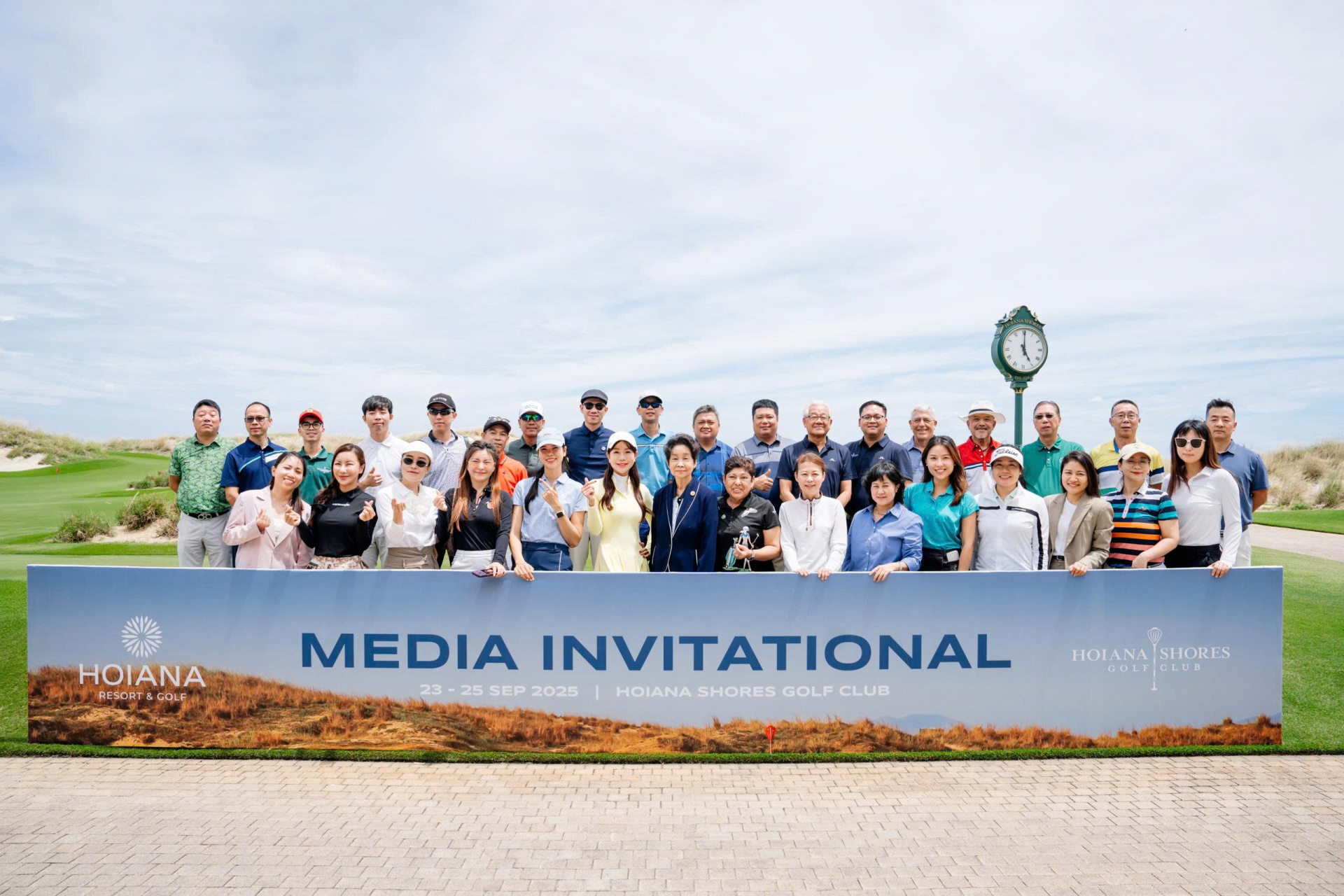
The Hoiana Shores Media Invitational event, held on 24 September 2025 at the prestigious Hoiana Shores Golf Club in Danang, Vietnam, successfully concluded, bringing together media professionals from across Vietnam. The significant event served as a new platform for sharing golfing insights and fostering networking opportunities among media representatives and golf clubs throughout Asia.
Related Articles
Vietnam's golfing boom
Spencer Robinson, Chief Communications Officer, Asia-Pacific Golf Confederation (APGC), who had been instrumental in organising the event provided a comprehensive overview of the remarkable growth of golf in Vietnam in recent years. Robinson also drew parallels with China, where golf is currently experiencing a decline, offering valuable lessons for Vietnam. He stressed the critical importance of establishing robust infrastructure to ensure sustainable growth, which in turn would yield tremendous economic advantages. Robinson projected the development of 100 new golf courses in Vietnam over the next five years, asserting that Vietnam is currently the hottest area for golf growth globally.
This impressive growth has been further underscored by the recent successes of Vietnamese golfers at the 2023 South East Asian Games, the 2024 Nomura Cup, and the 2025 US Junior Boy’s Amateur. Robinson advocated for the inclusion of public golf courses in the new wave of construction to maximise the sport's accessibility to the wider community, moving beyond its perception as an elite pursuit.
Robinson acknowledged the enduring and vital role of the media in promoting golf, appealing to the journalists present to continue their mission. He recounted highlights from his career in sports journalism, including his tenure on the editorial staff at the South China Morning Post, where he rose to become Chief Sportswriter and Deputy Sports Editor. His career initially involved covering football, but a shift occurred following the abolition of foreign players in Hong Kong matches and dwindling interest in the sport, leading him to a position covering golf.
Robinson also shared insights into the history of golf in China, which began in the 1930s, but was later forbidden until 1984 when the sport was reintroduced to New China under Deng Xiaoping, with Chung Shan Hot Spring Golf Course being the first golf course to open in New China. Given the prohibitive cost of golf in Hong Kong, this course provided a much-needed recreational outlet for golfers. Arnold Palmer, who designed the Chung Shan Hot Spring Course, observed the rudimentary irrigation system, which was initially wrongly installed above ground, and a course built entirely by hand due to the lack of mechanisation at the time.
However, China subsequently began to restrict golf course development, with many of the 683 courses open in 2017 having been built as a means to sell homes. This led to policy restructuring, followed by strict enforcement actions against any golf courses which had been illegally constructed. There are now fewer than 300 golf courses in China. Robinson cautioned that Vietnam must learn from this experience and ensure robust governance, particularly concerning environmental considerations, as it rapidly expands its golf course infrastructure.
Robinson also shared an amusing anecdote about the early days of golf in China, where he had to meticulously count clubs and golf balls when entering and exiting the country, and then explain to customs officers why he had fewer balls upon his return. Peter Tang Shu Chuen was identified as a talent spotter in Chung Shan, instrumental in identifying future golfing talent for China.
The growth of golf in Vietnam has been significant, with no golfers in 1990, rising to 8,000 by 1998, and 16,000 by 2002. Projections for 2025 indicate 70 courses and 100,000 players.
The Royal and Ancient Golf Club of St Andrews (R&A) reported a sustained 108 million golfers in R&A affiliated markets (excluding the US), with Asia leading the way with 26.2 million players, surpassing Europe and Canada combined. There has also been a notable surge in the number of women playing golf. The Asia-Pacific Golf Confederation (APGC), comprising 47 member countries, hosts major amateur events, including Junior and Senior, Mid-Amateur championships, and women’s amateur events such as the Women’s Amateur Asia-Pacific competition held at Hoiana Shores, Vietnam, in March 2025, where Jeneath Wong from Malaysia secured first place. The APGC has also partnered with the European Golf Association (EGA) to organise Ryder Cup-style match play events. Ding Wenyi made history as the first Chinese player to win an international championship and subsequently turn professional.
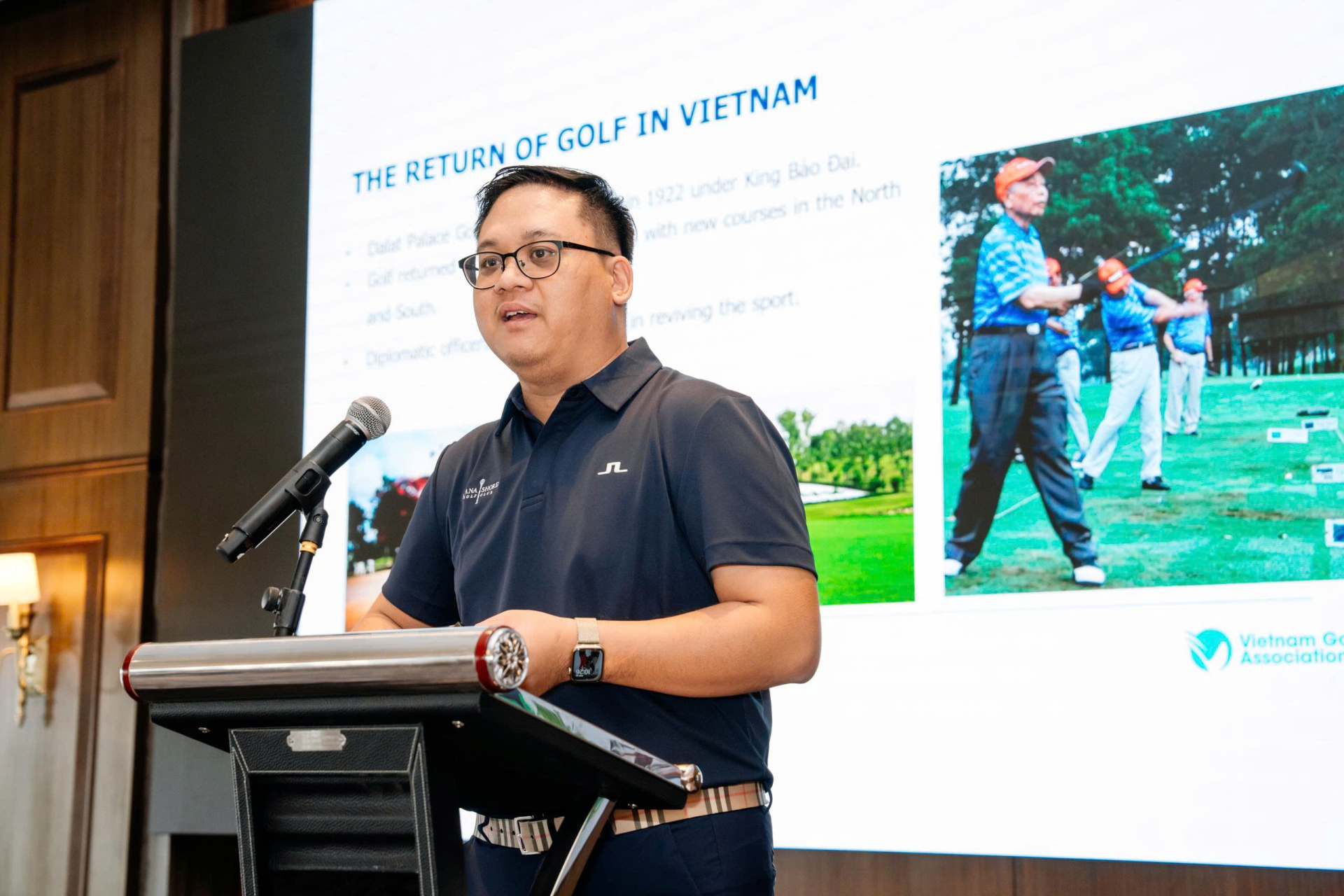
Vũ Nguyên, General Secretary, Vietnam Golf Association (VGA), has been another pivotal figure in the development of golf in Vietnam. He achieved distinction as the first Vietnamese referee appointed to the R&A Rules Committee, participating in the management of some of the world's most prestigious golf tournaments, including The Open Championship in the UK.
Vũ echoed the dramatic growth of golf and golf courses in Vietnam. He noted that golf was first introduced in Vietnam in 1922 at the Dalat Palace Golf Club under King Bao Dai. Following a demise, it then saw a resurgence in the 1990s, leading to the first national championship in recent years in 2005. The Vietnam Golf Association (VGA) was established in 2006, laying the groundwork for the sport's development and the launch of larger-scale events.
Key golfing growth milestones in Vietnam
- 2000: 6 courses and 4,000 players
- 2010: 17 courses and 10,000 players
- 2025: 70 courses and 100,000 players
Currently, Vietnam boasts 70 golf courses, with 6 in Hanoi, 5 in Binh Duong, and 4 in Vihn Phuc. Vũ stressed the importance of public golf courses to enhance accessibility in the future, thereby attracting foreign investment, encouraging golfing tourism, and positioning Vietnam as a destination for international events.
The VGA organises various tournaments, including the Vietnam Amateur Series, VGA Tour, and VGA Junior Tour, in addition to multiple international tournaments. These efforts have led to significant success for Vietnamese players, who secured 1 gold, 1 silver, and 1 bronze medal at the South East Asian Games. The VGA is also developing Vietnamese referees, who are now gaining representation in international events worldwide. In collaboration with the R&A, the VGA has introduced golf to schools, reaching over 5,000 students nationwide who are learning golf as part of their physical education lessons.
In terms of international coverage, the 2024 Nomura Cup also saw the introduction of international-standard live streaming and bilingual commentaries.
Groundswell of women's golf in APGC
Rae-Vadee T. Suwan, Secretary-General, Queen Sirikit Cup Secretariat, and Secretary-General, Thailand Golf Foundation, shared her extensive journey in golf, which began in 1973 with organising golfing events in Thailand. In 1978, she co-founded the Thailand Ladies Golf Association, which was officially registered in February 1979 under the chairmanship of Mom Kobkaew Abhakara. With strong ties to the royal family, this led to the creation of the Queen Sirikit Cup, officially known as the Amateur Ladies Asia-Pacific Invitational Golf Team Championship. Suwan highlighted Mom’s crucial role in requesting the challenge trophy from Her Majesty Queen Sirikit of Thailand, who graciously granted permission for the trophy to be named after Her.
Suwan then spearheaded the growth of women's golf by reaching out to the national golf associations of 14 countries, including Thailand, Korea, Japan, Hong Kong, Philippines, Burma, India, Sri Lanka, Indonesia, Malaysia, Singapore, New Guinea, Australia, and New Zealand, inviting them to send a team of three players to launch the national team championship in Bangkok, Thailand. Of the 14 invited countries, nine participated in the inaugural event. Suwan noted, “Nine is very auspicious because in Thai it means ‘progress and that have a way to go ahead’ and later we added in more countries over time including Japan, Australia and New Zealand, and currently have 15 member countries.”
Future of accessible golf
At the invitational, Dr Aylwin Tai CCM, CCE, President, Club Managers Association of America (CMAA)—China Chapter, unveiled an ambitious vision for establishing a 'Golf Silicon Valley' in Danang, Vietnam. Tai emphasised that Vietnam possesses all the essential elements for achieving this goal. These include abundant natural resources with suitable, currently underutilised land, a vast pool of intelligent, eager-to-learn, and ambitious local talent, and a progressive government that recognises the multifaceted benefits golf can offer. The multi-faceted benefits that such a project would bring the country encompass community integration, substantial ancillary investment from golfing industries keen to establish manufacturing bases to support golf courses, the immense appeal golf courses would have for both domestic and overseas tourism, and environmental, social and governance (ESG) advantages inherent in modern, sustainable golf course development.
Tai articulated his goals for Vietnam, stating, "My vision is to create Vietnam’s first municipal golf course in Danang, and to showcase globally how this is a great model for future economic, social and environmental development." Elaborating on the broader impact, he noted, "Aside from all the benefits that golf brings in terms of creating communities, enhancing communications across cultures, training and nurturing future sports champions, the model would stimulate economic development through the ancillary industrial zone and bring a huge boost to tourism in the area."
To ensure the sustained success of future golf developments anywhere in the world, Tai also underscored the paramount importance of integrating golf development with local communities through the training of local talent. He cited the example of The Park, a golfing project that transformed the West Palm Beach Golf Course, redesigned by architect Gil Hanse, Jim Wagner, and co-founder Dirk Ziff, with a strong emphasis on ‘Open Golf’. This initiative has ensured that individuals from all backgrounds, abilities, and circumstances have equal opportunities to experience and enjoy the game of golf.
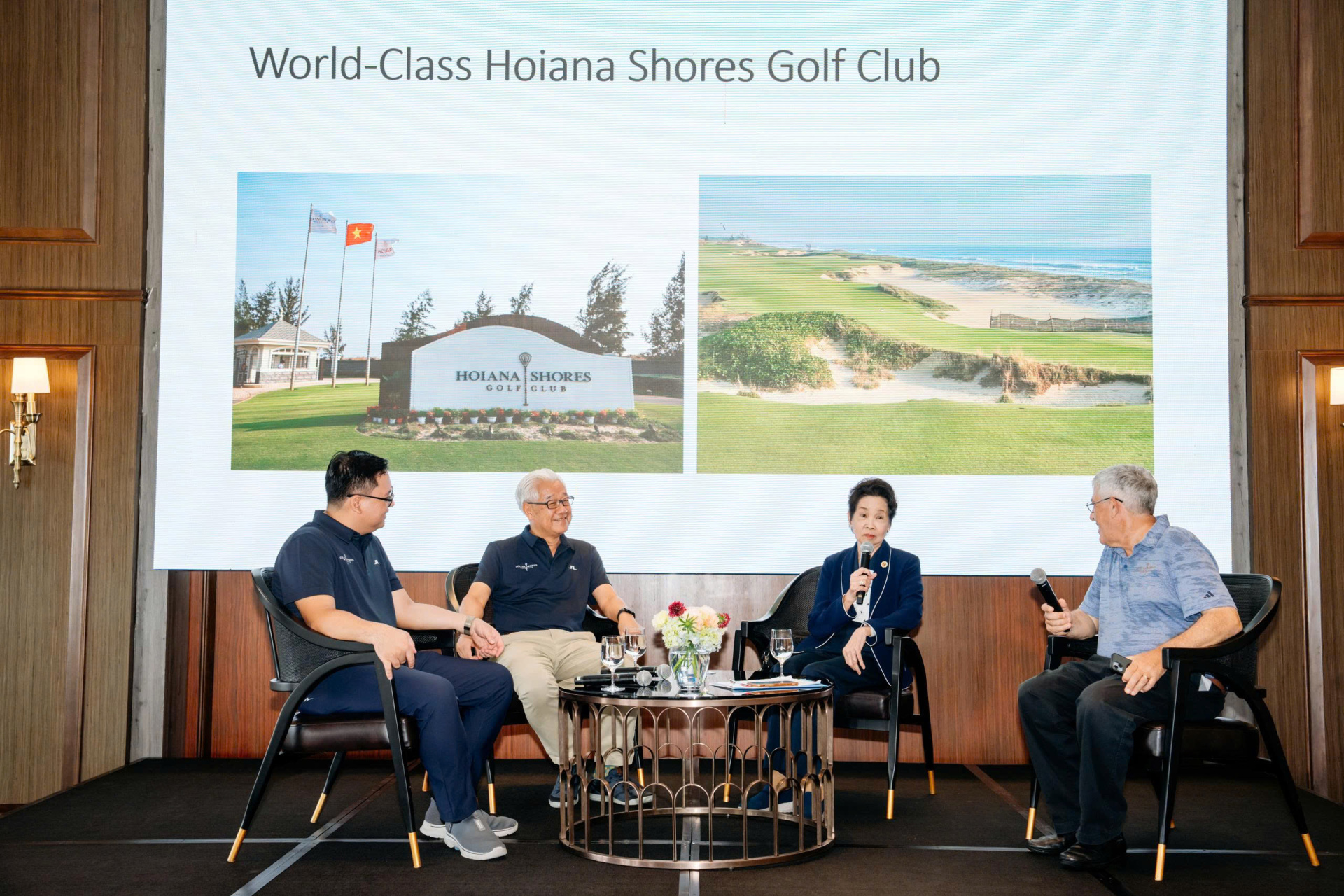
Tai further highlighted the importance of clarity of vision, sustainability, and robust governance in ensuring prudent development in any country. He advised golf courses, organisations, and governments to consider the 17 Sustainable Development Goals (SDGs) adopted by the General Assembly of the United Nations to achieve meaningful ESG objectives. Environmental impact, social impact, and governance are intricately linked, and it is essential for organisations to implement environmental sustainability safeguards, behave in a socially responsible manner, and promote economic growth through initiatives such as natural habitat protection, conservation, community engagement, and education programmes.
Tai stated, “A big part of golf revolves around creating and engaging ‘communities’, not just the golfing community itself, but also nurturing local talent to become part of the staff team, involving local residents in golf training programmes, encouraging the wider community to come and visit the golf course and learn more about the sport. It’s also about working in unison with the local business community.”
From a governance perspective, Tai explained that this encompasses both good internal governance—ensuring SDGs within golf courses—and championing good external governance, with golf course owners collaborating with the government to achieve long-term sustainable economic growth and community development.
Rae-Vadee also emphasised the significance of making golf accessible to all, which motivated her to establish a not-for-profit Thailand Golf Foundation. This Foundation partners with six golf associations as key stakeholders to help open golf to everyone, especially school children, and in collaboration with a golfing academy, has developed a curriculum aligned with R&A golfing principles. This curriculum aims to train physical education teachers in schools, enabling them to instruct children in golf skills as part of the school curriculum.
Robinson concluded the event highlighting the crucial role the media plays in fostering the future development of golf. He observed that despite the recent decline of golfing media in Singapore, Hong Kong, and Mainland China, the future of golf and golf media in Vietnam appears exceptionally promising.
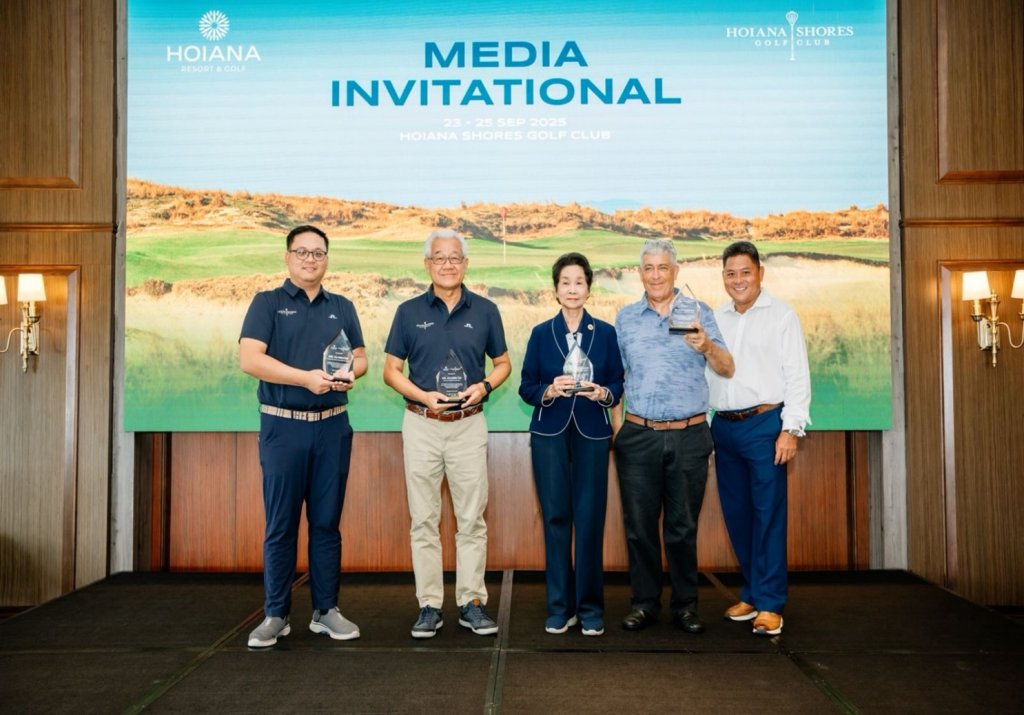
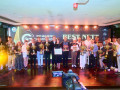
Wee Peng Siong, General Manager, Hoiana Shores Golf Club gives appreciation for the collective centuries of golf management experience shared by the panellists (left to right):
- Vũ Nguyên, General Secretary, Vietnam Golf Association
- Dr Aylwin Tai CCM, CCE, President, Club Managers Association of America—China Chapter
- Rae-Vadee T. Suwan, Secretary-General, Queen Sirikit Cup Secretariat
- Spencer Robinson, Chief Communications Officer, Asia-Pacific Golf Confederation
Source:
Thông cáo báo chí
Other Articles

-cr-120x90.jpg)

Read it now
-cr-290x396.jpg)
-cr-290x396.jpg)