

Experts Discuss Ways to Make Vietnam a Regional Golf Destination
According to many experts, Vietnam needs to build a national strategy, link golf with tourism, and establish a set of standards to make Vietnam a top destination.
According to data from the Asia-Pacific Golf Confederation (APGC), the world has over 108 million golfers in 2024. The global golf tourism market is estimated to reach $25.3 billion in 2024 and is forecasted to grow to $41.9 billion by 2030, according to estimates from Grand View Research. Golf tourists spend an average of $2,200 per trip, significantly higher than mass tourists.
In the Asia-Pacific region, the golf tourism market size is estimated to be $4.97 billion in 2024 and is projected to increase by nearly 10% annually during the 2025–2030 period. Last year, Thailand surpassed the 35 million international visitors mark, creating a foundation for golf growth. Japan's golf tourism sector alone is projected to reach $617.1 million in 2024. Meanwhile, Malaysia is emerging due to a strong recovery in Chinese tourists and specialized golf famtrip programs for this market.
Vietnam has been honored for 8 consecutive years as the "Best Golf Destination in Asia" and twice as the "Best Golf Destination in the World." However, experts note that the proportion of international visitors who play golf in Vietnam remains modest, much lower than in countries like Thailand, where 8-9% of international visitors include golf in their trip.
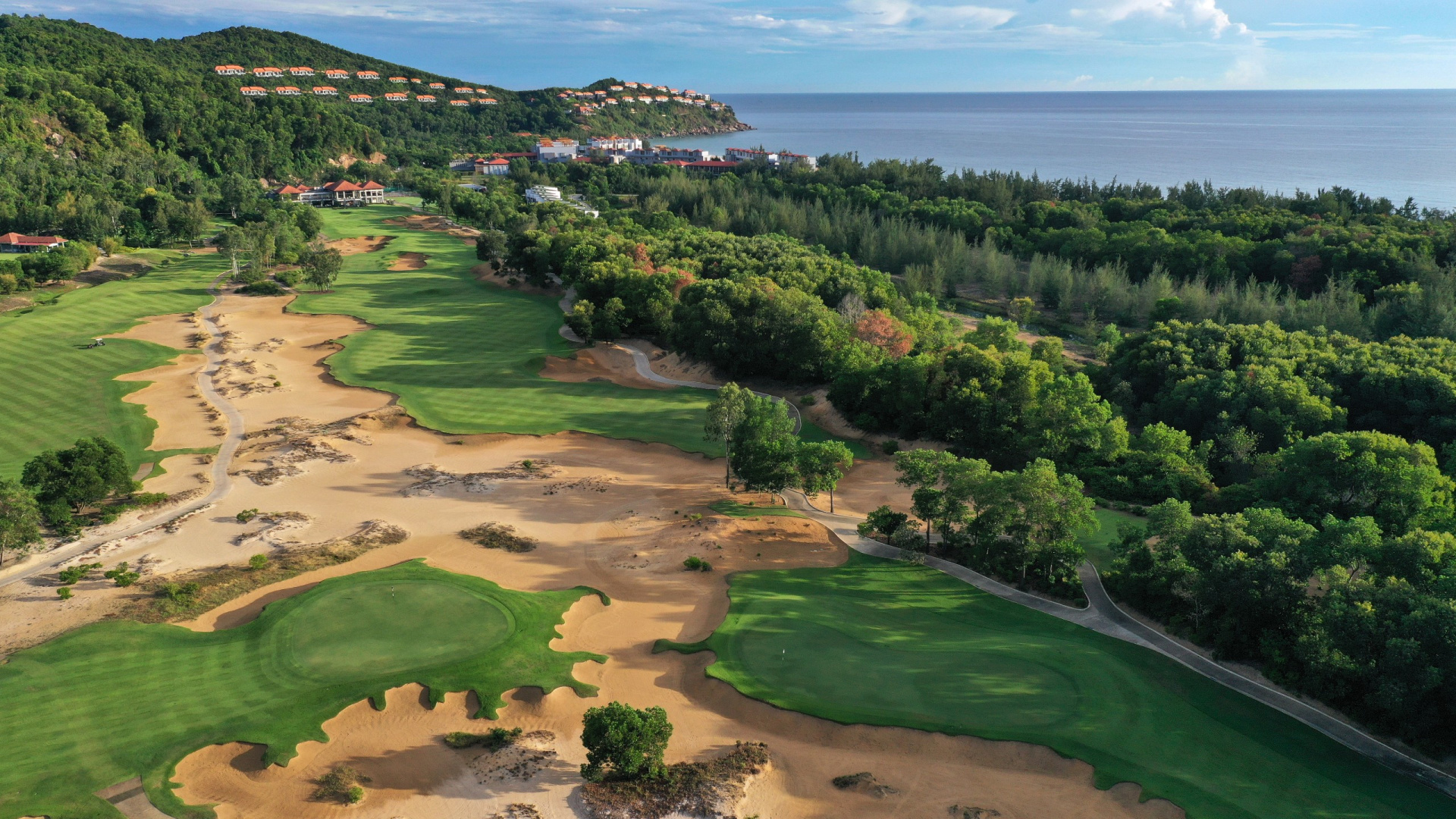
Golf course in Lang Co, Hue
Experts believe Vietnam's first weakness is a lack of a synchronized service quality standard system. Each course still operates according to its own standards. Furthermore, without a national set of indicators, Vietnam finds it difficult to build confidence in the international market.
Next, local competition among golf courses reduces the overall strength. Courses promote themselves individually, lacking cooperation to form a common brand. In contrast, Thailand has established "Golf Thailand" as a national brand product, connecting courses, hotels, and airlines into a seamless chain.
"If it wants to compete with Thailand or Malaysia, Vietnam needs a clear set of standards so that any golfer who arrives feels the experience is guaranteed," commented Mr. Spencer Robinson, Communications Director of the Asia-Pacific Golf Confederation (APGC).
Besides infrastructure, a major challenge is the human resources for the golf industry. Course management teams, coaches, and caddies in Vietnam are mainly trained through practical experience, lacking a standardized international system. While many countries in the region have built training programs linked with AGIF or R&A, Vietnam lacks a formal "school."
Additionally, the attractiveness of the destination depends on its ability to link with other industries. In Thailand, most international visitors choose the sport as part of their resort or MICE (Meetings, Incentives, Conferences, and Exhibitions) journey. "Golf - 5-star resort - conference" packages create added value.
In Vietnam, many courses are located within complex resorts in areas like Da Nang, Nha Trang, and Phan Thiet. However, experts argue the connection remains fragmented, with the sport separated from cultural tourism, and MICE not closely integrated with golf courses.
"In successful countries, international golfers are always reassured because the service is consistent from one course to the next, from the grass quality, the clubhouse, to the caddie team. This cannot be achieved by just a few individual courses doing well; it requires industry-wide uniformity. This is the foundation for Vietnam to build trust and firmly position itself on the international golf map," Mr. Spencer Robinson added.
Concurring with this view, Ms. Nguyen Hoang Tu Anh (Dandelly Nguyen), AGIF Executive Committee member and CEO of 54 Vietnam, emphasized that Vietnam cannot stop at opening more courses. Instead, it needs a long-term strategy and a clear national brand.
For example, Thailand has implemented the Thai Golf Passport as a strategic tourism product. Japan has Golf in Japan, a complete information portal for international athletes. Golf Saudi is developed as an ecosystem within Vision 2030. And England Golf, with its 2025-2030 strategy, focuses on safety, inclusivity, and sustainable development.
According to her, Vietnam also needs a "Golf in Vietnam," which would standardize services, enhance human resource capacity, connect golf with resorts, MICE, and aviation, and simultaneously promote it uniformly to the international market. "If we go in the right direction, Vietnam can absolutely turn golf from a high-end tourism product into a high-value industry, directly contributing to its status as a world-leading golf destination," Ms. Dandelly Nguyen said.
To find development solutions, the Vietnam Golf Course Owners Summit 2025 will be held on October 31st at Laguna Lang Co Golf Resort, Hue.
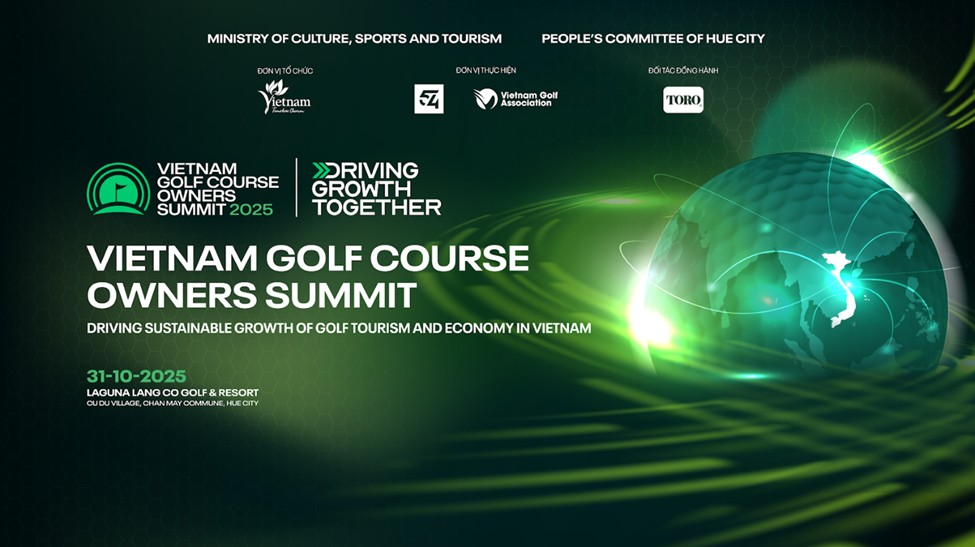
The event is directed by the Ministry of Culture, Sports and Tourism and the People's Committee of Hue City; coordinated by the Vietnam National Authority of Tourism, Vietnam Sports Administration, Hue Department of Culture and Sports, and Hue Department of Tourism; and co-implemented by the Vietnam Golf Association (VGA) and the 54 Group—an international consulting firm for golf development and operations. The event will focus on establishing a national criteria system, promoting service quality standardization from infrastructure to human resources, enhancing multi-sectoral linkage, and gradually building a common brand for the industry.
|
Vietnam Golf Course Owners Summit 2025 Information:
|
Source:
Thông cáo báo chí
Other Articles

-cr-120x90.jpg)


Read it now
-cr-290x396.jpg)
-cr-290x396.jpg)