

Beyond 18 Holes: Seeing More Possibilities for Golf in Vietnam
From a mountainside in Montana to a mountain valley in Utah, from the vast desert landscapes of Saudi Arabia to wooded English countryside threaded with ponds, this has been one of the busiest and most interesting years of my golf course design career. Our team is working on projects at different stages, and considering opportunities in still more places around the world. It is wonderful to see how widely interest in golf has grown.
Related Articles
By Sir Nick Faldo | Chairman, Faldo Design
From a mountainside in Montana to a mountain valley in Utah, from the vast desert landscapes of Saudi Arabia to wooded English countryside threaded with ponds, this has been one of the busiest and most interesting years of my golf course design career. Our team is working on projects at different stages, and considering opportunities in still more places around the world. It is wonderful to see how widely interest in golf has grown.
What keeps me excited is that no two sites are the same. Each one has its own horizon, contours, vegetation and character. I don't arrive with a set of familiar holes and look for somewhere to put them. I walk the ground and begin to see individual golf holes in my mind: how they might look, how they might play, and how they could eventually fit together. After all these years, I still love that moment when a piece of land starts to suggest possibilities.
A QUESTION WORTH ASKING
Why have we become so certain that a proper golf course must have eighteen holes?
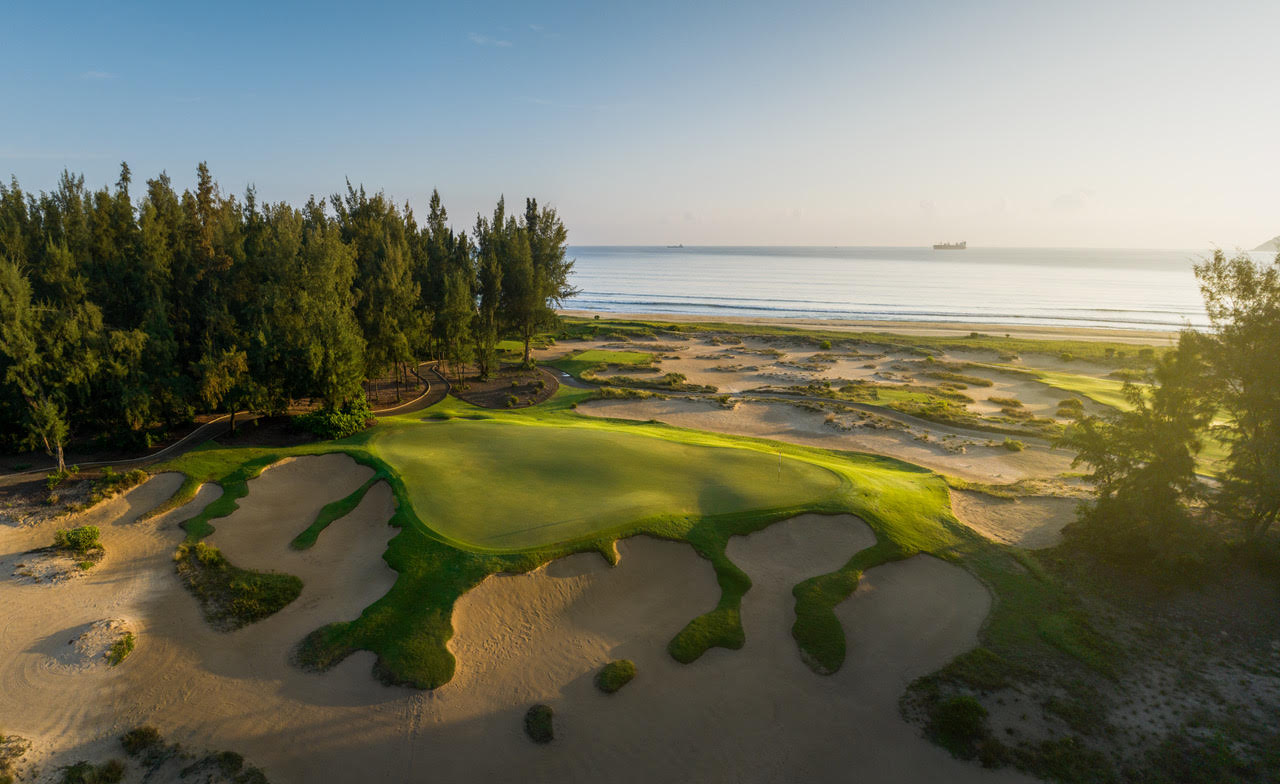
01 / THE CONVENTION OF EIGHTEEN HOLES
When twelve holes were enough
Did you know that the very first Open Championship, at Prestwick in Scotland in 1860, was played on a twelve-hole course? The competitors simply went round three times. The Open was later played at Musselburgh over nine holes, with four circuits making up the championship. At St Andrews, a round on the Old Course once consisted of twenty-two holes before it became eighteen. Even Muirfield, a place very close to my heart, began with sixteen holes before being extended to eighteen for its first Open.
There was nothing second-rate about the golf played in those days. Think of hickory-shafted clubs, early golf balls, uneven lies and putting surfaces very different from the finely prepared greens we enjoy now. They faced a formidable challenge with equipment that gave them far less help. Of course, championship golf is still extraordinarily difficult. I know that from experience. But those early players showed that the quality of the contest was never defined by the number of different holes on the property.
IN NICK'S WORDS
Eighteen holes became the standard, and I love a great eighteen-hole course as much as anyone. Yet it is a format, not a guarantee of quality. I would much rather create twelve exceptional, memorable golf holes than eighteen unremarkable ones that leave little impression on the player.
02 / FINDING THE COURSE IN THE LANDSCAPE
From the jungle to Lăng Cô
THE FIRST SITE WALKS
But amid all that untamed ground, I could begin to see the golf.
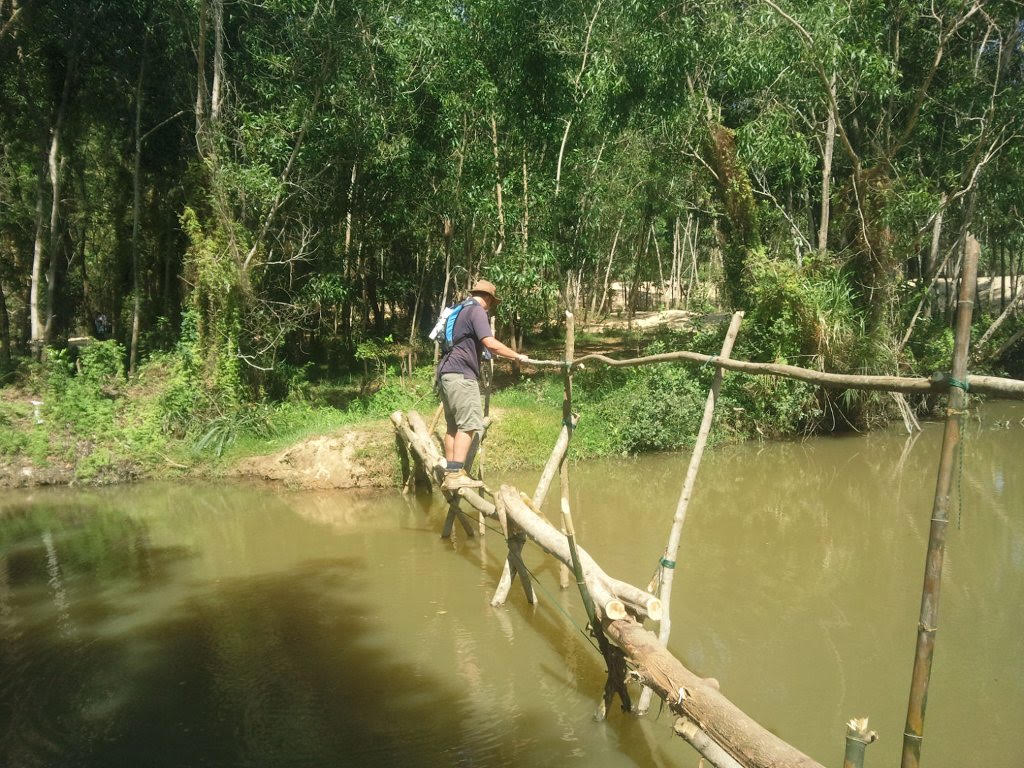
I think about that whenever I return to Vietnam, particularly to Laguna Golf Lăng Cô. I can still remember exploring the site before there was anything resembling a finished golf course. We had to make our way through dense, tangled jungle, pushing through undergrowth and vines, crossing a fallen log and coming across a snake. There was nothing manicured about it. Trees and vegetation had grown and fallen as nature intended, and in places the jungle was almost impenetrable. It was quite an adventure. But amid all that untamed ground, I could begin to see the golf.
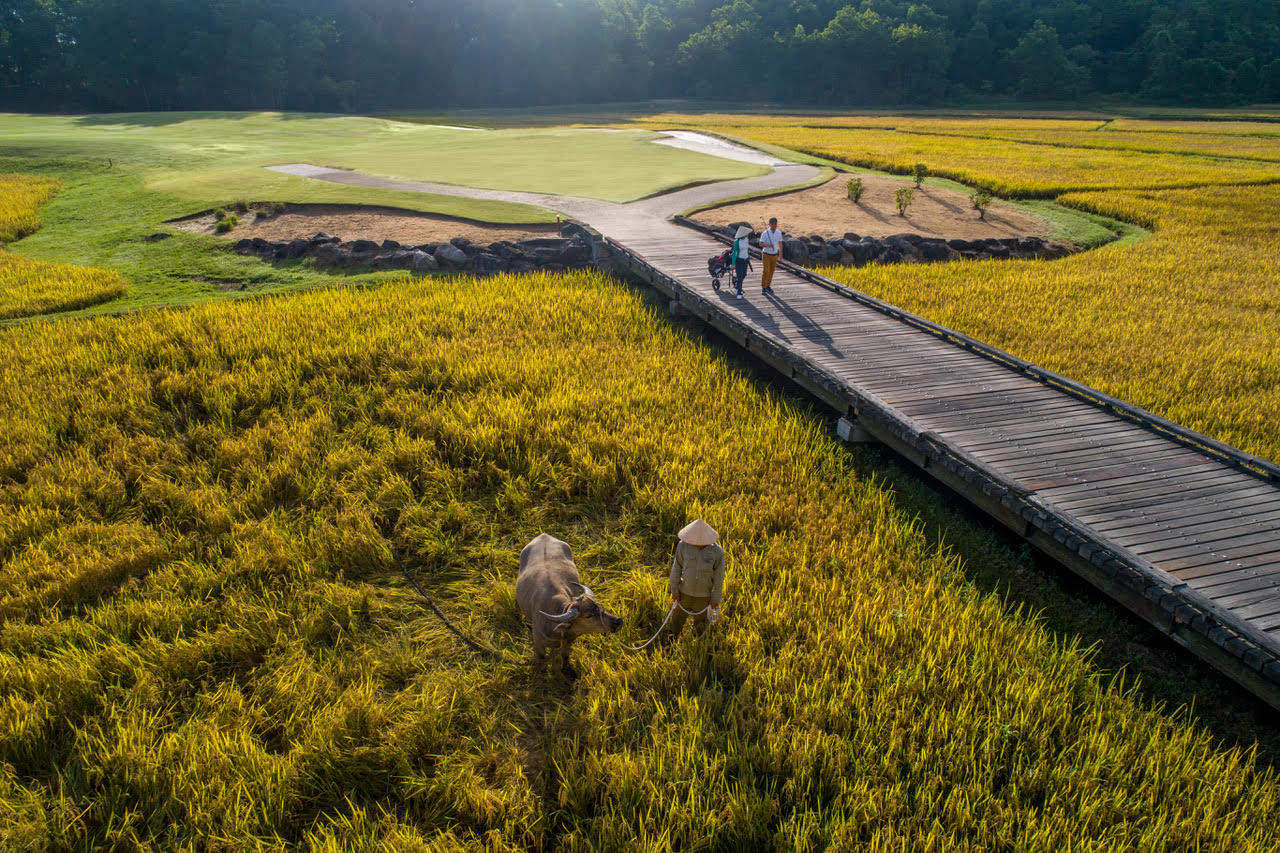
The landscape was extraordinary because it kept changing. There were mountains and exposed rock formations, thick jungle and natural undergrowth, rivers and wet ground, rice paddies, sandy stretches and a wonderful coastal setting. As a designer you could hardly ask for a more interesting collection of natural ingredients. The difficulty wasn't finding enough things to make the course memorable. It was deciding how to let them speak for themselves.
I never wanted to take that landscape, flatten it, polish it and make it look like a resort course that could have been built anywhere. I wanted golfers to know they were in Vietnam. The rice paddies are a particularly good example. Instead of treating wet low-lying ground as something to be swept away, we could bring a feature of the local landscape into the golfing experience. The course moves through distinctive environments, each with its own atmosphere. You remember the journey because the individual holes leave an impression.
There is a special satisfaction in going from those first walks through the jungle to standing on a completed course and watching people play. What I could picture in my mind has become something other people can experience. That transformation is one of the reasons I still get such a thrill from design.
03 / COMPOSITION, STRATEGY & AN INDEPENDENT PERSPECTIVE
A picture from every tee
Every hole has to work as its own picture. When a golfer arrives on the tee, I want the view to draw them in. There should be a bit of a wow factor, but that doesn't mean filling the scene with bunkers, ponds and trees simply because you can. Each hole needs a focal point, proportion and balance. If everything is shouting for attention, the picture becomes a mess. Knowing what to leave out matters just as much as knowing what to put in.
A bunker that looks right in a small, enclosed setting may be completely lost in a vast open landscape. The shape of a hazard, the line of a fairway and the scale of a green must relate to the terrain. I pay attention to the natural horizon, to the trees, the rocks and the contours. I don't want the golf to fight the land. I want it to sit comfortably within it. Knowing what to leave out matters just as much as knowing what to put in.
The Artist's Eye - A Wife's Perspective
Lindsay, Lady Faldo
"I remember walking with Nick through the sand dunes outside Dubai and asking what he was looking at. To me, there was nothing but sand. He told me he could see golf holes. I have come to think of each hole as one of his individual compositions, with its own focal point, character and balance, before it becomes part of a larger course. He is forever sketching at his desk. I do not always know whether he is working on a particular project or simply following an idea.
And when I hear him describe walking through the jungle in Vietnam, crossing a fallen log, encountering a snake and eventually seeing that landscape become a finished golf course, I recognise the same delight in creating something from what he first saw in his mind. You can see it on his face. There is something wonderful about watching someone so completely in his element, doing what he loves. He loves the process."
The Architect’s Perspective
Paul Jansen - Associate Architect, Faldo Design
"Working with Sir Nick at Laguna Lăng Cô, what struck me was his energy and enthusiasm for the whole process. He was passionate about the project and loved the adventure of exploring the site, finding something interesting and discussing how we might bring it into the golf.
With such a varied landscape, there was plenty to discover, and that sense of curiosity made it an exciting project to work on with him. He had a clear vision, but there was always room to explore ideas and see what the land might offer as the course developed. There was such a strong focus on strategy using many of the natural features on site to add strategic interest."
Source:
Doanh nghiệp/đối tác cung cấp
Other Articles




Read it now